
Skip to content

Family Exercise in the Winter

You’re not imagining it. As the days grow shorter and the air cooler, the kids are getting restless and you may be too. According to the Center for Disease Control (CDC), kids need at least 1 hour of physical activity…every day. Adults should be partaking in either 2.5 hours of exercise at a moderate level OR 1.25 hours of vigorous exercise per week, minimum. Don’t let this cold season give you an excuse to skip the physical exercise and crawl back under your cozy covers. Here are some fun ways to incorporate movement and physical activity through the winter months for the whole family.
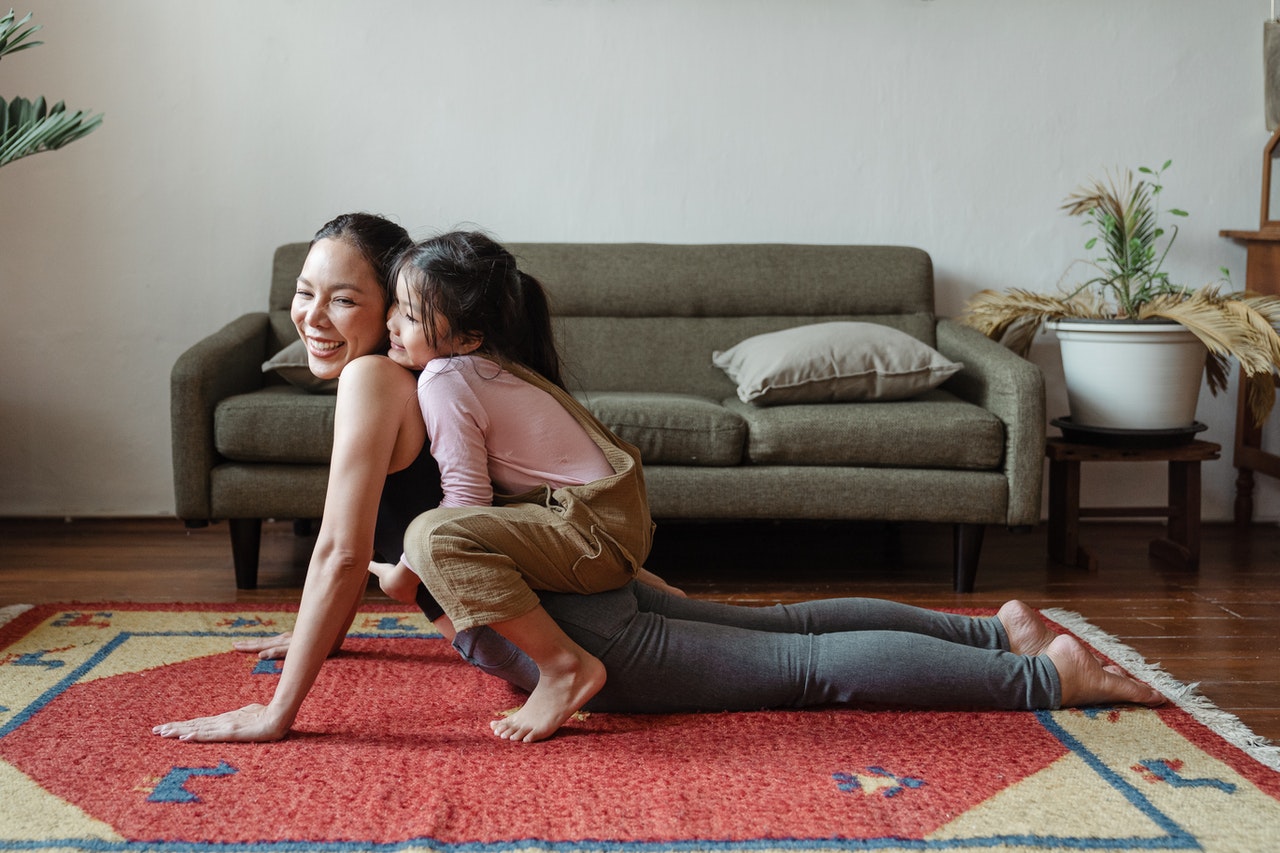
INDOOR EXERCISE

-Resistance Training- Bodyweight exercises are a great way to improve balance, flexibility, and strength without any bulky equipment. With a simple Google search, you can EASILY uncover a variety of exercises using the resistance of body weight alone.

-Boxing- Get your heart pumping with a simple boxing routine. Boxing provides a full-body workout, ducking, blocking, and throwing punches. Focus on your footwork for a cardio heavy conditioning workout that’ll get you sweating.

-Play Games- Purchase your family some soft nerf balls and start a game of indoor dodgeball. Try setting up an indoor basketball hoop for fun way to start laundry day. Consider dance parties in the kitchen while putting away dishes. Use commercial breaks to challenge each other to dance contests or during study breaks from online schooling. Try making a hopscotch or obstacle course with painters tape. Get creative and have fun with it!Get creative and have fun with it!

-Family Mindfulness- Competitive activities teach children to master their bodies, and often this can lean hard into focusing on their weaknesses. And while activity and goal setting are imperative to growth, we need to remember to teach our children to be content with themselves in a noncompetitive and appreciative way as well. Activities like Tai Chi, Yoga, or Meditation can help children feel at one with their bodies, teaching them to respect their physical and emotional selves.

SEEK OUT RECREATIONAL FACILITIES

Ready to get out of the house but not into the cold? No worries, we have exercises for you too.

-Swimming- It’s never the wrong time to go swimming. Swimming is a phenomenal physical activity for so many reasons. Firstly, swimming is an age-friendly activity. Being immersed in water provides low-impact therapy for injury rehabilitation or physically limiting conditions. Because swimming involves endurance it is also a great way to keep muscles toned, including those supporting the heart and lungs. Swimming is a full-body workout that is known to improve flexibility, coordination, balance, and posture all the while alleviating stress. Need we say more?

-Rock Climbing- The benefits of climbing are vast as well. Climbing combines mental stimulation and physical power beautifully to burn over 600 calories per hour. Not only does climbing involve the arm muscles used for gripping and pulling, but this sport will also activate legs, back, and shoulder muscles as well. The balance and finesse of this sport work the core to stabilize movements, leading to a stronger and less injury-prone body. Finding an indoor rock wall could be the winter workout you have been looking for.

-Bowling / Trampoline Park- Even with these quarantine guidelines in place and the pandemic following us into the winter, bowling alleys and trampoline parks are beginning to open back up with new safety guidelines in place. On top of the muscle-building motion of the arms and legs with these activities, they also require attention to detail for successful performance. Both of these activities are great for building hand-eye coordination.

OUTDOOR EXERCISE

Moving around outside can get your heart rate up and keep you warm, but if that isn’t enough consider a warm-up exercise routine for inside before you brave the cold. Remember to dress in long layers, wear boots instead of gym shoes, wear a hat, gloves, and don’t forget warm socks.

Try encouraging your kids to get outside. Consider a walk with the dog, visiting a new park, playing basketball, soccer, or even a good old game of frisbee. Skiing, snowboarding, and snowshoeing are great, but obviously only if you have the snow, equipment, and knowledge. Consider seeking out a local ice rink. Ice skating isn’t just for kids. In fact at a moderate pace simply skating laps can burn up to 500 calories per hour while toning your legs, butt, and similar core stabilizing muscles as rock climbing for fine movements and balance. If ice skating sounds too cold for you, consider bundling up and going for a bike ride. Because of its cardio-heavy nature and use of the quadricep muscles biking will warm your body quickly.

Scheduling the proper time for these activities for you and your family is crucial. Often kids have a lot of energy just after they have just finished school for the day, this is an optimal time to introduce rousing new adventures. Also keep in mind that positive reinforcement is the best way to form new healthy habits, both for you and your kids. Keep the dialogue light and encouraging as you discover these exciting wintertime activities together. While picking up new activities can seem like a large undertaking, you are potentially investing in new lifelong passions. And who knows, you might even end up with a workout you’ll want to do all year long.

Start small and remember to reach out to me if you need any advice.
Posted in | Comments Off on Family Exercise in the Winter

Immune System Health and TCM

Viruses, germs and bacteria are everywhere. They are in the food we eat, the air we breathe, and the water we drink. According to Chinese medicine, they do not cause disease. When a certain organ system is already weak and unable to resist outside invasion, it is therefore prone to attack by germs, such as viruses and bacteria. Illness and disease can only result when our body provides a hospitable environment.

For example, let’s say you inhaled influenza virus. Just because these germs are present, does not mean you will get the flu. There are several factors involved such as the health of your lungs, the vitality of your immune system, and your overall health.

Germs gather and thrive only in weakened parts of the body. When there is an imbalance of Qi, the normal functions of your body will ultimately be affected. This can change the normal immune system response and lead to illness.

A disease requires both a pathogen and a host. These nasty critters can only survive and flourish if circumstances are ripe. When the germs are strong, but the environment of the host (you) is stronger, the disease will be resisted. If the host is weak, however, then your environment can become a hospitable refuge for viruses, germs, bacteria and other microbes to set up shop.

Your Meridian channels control the flow of healing energy throughout your entire body, including your organs. The function (health) of your lungs, and the strength of your immune system all depend upon the quality, quantity and balance of Qi which flows within your meridian channels. The “true cure” of disease is simply NOT to kill germs, but to reestablish and build up the body’s amount of healing Qi. This will ultimately provide the adequate amount of Qi in order to restore the integrity of your meridian and organ system.

KISS SICK GOODBYE

Along with frequent acupuncture treatments, here is another way to boost your immunity in order to stay well through spring.

You can begin by taking astragalus throughout the winter. This is an herb that is revered for its first-class immune support. It is also useful if you feel tired, weak, or apathetic.

Modern research suggests that astragalus is a “biological response modifier,” increasing the function of the adrenal cortex, helping us adapt to stress easier, and increase the production of white blood cells.

If you have been around folks who are sneezing and coughing, try using maitake. This little mushroom can also help to stimulate the immune response. You can use this regularly, after being exposed to some nasty bug.

If you have already caught a cold, you can try echinacea. This herb can help to shorten the duration of a cold. Start using it as soon as you feel under the weather and then stop use as soon as you feel well again.

Herbs are a powerful medicine. It is helpful to consult with an herbalist to make sure you are getting the right type of herbs.

If you or someone you know are looking for immune-supportive remedies, schedule an appointment with me today. Acupuncture and Traditional Chinese Medicine have so much to offer.

Posted in | Comments Off on Immune System Health and TCM

Anxiety

According to the Anxiety Disorders Association of America, anxiety disorders are the most common mental health disorder in the U.S., affecting 40 million adults and costing more than $42 billion a year.

Feelings of anxiety, worry and fear related to significant and challenging events are justified and very common. Anxiety becomes a problem when emotional reactions are out of proportion with what might be “normally” expected in a situation, and when symptoms interfere with a person’s daily functioning or sleep patterns. Mild anxiety leaves a person feeling a bit unsettled, while severe anxiety can be extremely debilitating.

Anxiety is used as a general term for several disorders that have common symptoms – such as nervousness, worrying, apprehension and fear. Anxiety disorders can be classified into several more specific types. The most common are briefly described below.

Generalized Anxiety Disorder (GAD) is characterized by unrealistic, persistent and excessive worry about everyday things. People with this disorder often expect the worst and experience exaggerated worry and tension, even when there is no apparent reason for concern.

Panic Disorder is characterized by brief or sudden attacks of intense terror and apprehension that leads to shaking, confusion, nausea, dizziness and difficulty breathing. Panic attacks tend to arise abruptly and seemingly out-of-the-blue, causing the individual to become preoccupied with the fear of a recurring attack.

Phobia is an irrational fear and avoidance of an object or situation. Phobias commonly focus on flying, bridges, insects, heights, dental or medical procedures and elevators. Having phobias can disrupt daily routines, reduce self-esteem, limit work efficiency and put a strain on relationships.

Social Anxiety Disorder is characterized by a fear of being negatively judged and scrutinized by others in social or performance-related situations. Different variations of this type of anxiety include a fear of intimacy, stage fright and a fear of humiliation. People suffering from this disorder can sometimes isolate themselves in an attempt to avoid public situations and human contact.

Obsessive-Compulsive Disorder (OCD) is an anxiety disorder characterized by unwanted or intrusive thoughts, which often make the sufferer feel compelled to repeat certain behaviors or routines. Even when the OCD sufferers know the irrationality of their compulsions, they feel powerless to stop them. They may obsessively wash their hands, clean personal items or constantly check light switches, locks or stoves.

Post-traumatic Stress Disorder (PTSD) is anxiety that results from previous trauma such as military combat, rape, a natural disaster, a serious accident or other life-threatening events. Most people who experience such events recover from them, but people with PTSD continue to be anxious and severely depressed for months or even years following the event. They often experience flashbacks and behavioral changes in order to avoid certain stimuli.

Acupuncture Can Help. A clinical study conducted in China in 2010, has concluded that acupuncture is a “safe and effective” treatment for mood disorders including depression and severe anxiety, in some cases proving to increase the effectiveness of medication-based treatments. Additionally a 2009 study, again in China, determined that acupuncture alone could help patients who suffer from anxiety but cannot be chemically treated due to intolerable side-effects of medications.

In many Western schools of thought, anxiety disorders are considered to be dysfunctions in a person’s brain chemistry. An acupuncturist does not view anxiety as a brain dysfunction, but rather as an imbalance in a person’s organ system. In Traditional Chinese Medicine, this imbalance is called Shan You Si (“anxiety & preoccupation”), and is believed to affect the main organs: the Heart, Lung, Spleen, Liver, and Kidneys. Each organ is related to different aspects of a person’s emotions.

For instance, worry is said to affect the Spleen, grief affects the Lungs, anger the Liver, fear the Kidneys, and lack of joy the Heart. If a person experiences one or more of these emotions over a long period of time due to lifestyle, dietary, hereditary and environmental factors, it can cause an imbalanced emotional state and lead to various anxiety disorders.

The role of an acupuncturist is to investigate the underlying causes of the anxiety by carrying out a thorough diagnostic evaluation in order to determine which organ system has been affected and is out of balance. The acupuncturist will then seek to restore the imbalance by inserting fine, sterile needles into the points correlating to those organs. Additionally, acupuncture helps to reduce stress, ultimately encouraging and supporting a greater sense of well-being and balance.

Resources:

http://www.adaa.org/about-adaa/press-room/facts-statistics

http://www.acupuncture.com/newsletters/m_july10/anxiety.htm

Zhang (2010). “The effectiveness and safety of acupuncture therapy in depressive disorders: Systematic review and meta-analysis”. Journal of Affective Disorders, 124, 1-2, July 2010.

Wen (2009). “Combination of acupuncture and Fluoxentine for depression: A randomized, double-blind, sham-controlled trial”. The Journal of Alternative and Complementary Medicine, 15, 8, August 13, 2009.

Posted in | Comments Off on Anxiety

What can acupuncturists treat?

Acupuncture is recognized by the National Institute of Health (NIH) and the World Health Organization (WHO) to be effective in the treatment of a wide variety of medical problems. Below are some of the health concerns that acupuncture can effectively treat:

  • Addiction
  • Anxiety
  • Arthritis
  • Asthma
  • Bronchitis
  • Carpal tunnel syndrome
  • Chronic fatigue
  • Colitis
  • Common cold
  • Constipation
  • Dental pain
  • Depression
  • Diarrhea
  • Digestive trouble
  • Dizziness
  • Dysentery
  • Emotional problems
  • Eye problems
  • Facial palsy
  • Fatigue
  • Fertility
  • Fibromyalgia
  • Gingivitis
  • Headache
  • Hiccough
  • Incontinence
  • Indigestion
  • Irritable bowel syndrome
  • Low back pain
  • Menopause
  • Menstrual irregularities
  • Migraine
  • Morning sickness
  • Nausea
  • Osteoarthritis
  • Pain
  • PMS
  • Pneumonia
  • Reproductive problems
  • Rhinitis
  • Sciatica
  • Seasonal affective disorder (SAD)
  • Shoulder pain
  • Sinusitis
  • Sleep disturbances
  • Smoking cessation
  • Sore throat
  • Stress
  • Tennis elbow
  • Tonsillitis
  • Tooth pain
  • Trigeminal neuralgia
  • Urinary tract infections
  • Vomiting
  • Wrist pain
Posted in | Comments Off on What can acupuncturists treat?

How are acupuncturists educated?

Today, acupuncturists undertake three to four years of extensive and comprehensive graduate training at nationally certified schools. All acupuncturists must pass a national exam and meet strict guidelines to practice in every state.

Posted in | Comments Off on How are acupuncturists educated?
(848) 444-8358 Directions Contact/Schedule